Local Search Engine Optimization Companies: How to Choose
The best local search engine optimization companies do one thing consistently: they improve your visibility where buyers are actually searching, in your...
 Written by Vladimiros Mykogian
- Local SEO is a specific discipline. It is not the same as general organic SEO, and a company that is good at one is not automatically good at the other.
- Six Criteria for Evaluating Local Search Engine Optimization Companies
- A credible local SEO company will look at your current situation before quoting you.
- Activity reports ("we built 12 citations this month") are not the same as outcome reports ("your local pack visibility increased by 34% this month").
The best local search engine optimization companies do one thing consistently: they improve your visibility where buyers are actually searching, in your area, for what you sell. But the market is crowded, pricing is all over the place, and it is genuinely difficult to tell capable agencies from those who will take a retainer and send you a PDF report every month. This guide gives you a clear framework for evaluating your options and making a decision you will not regret.
What Local SEO Companies Actually Do (and What to Expect)
Local SEO is a specific discipline. It is not the same as general organic SEO, and a company that is good at one is not automatically good at the other. Legitimate local search engine optimization companies focus on a defined set of activities:
Google Business Profile optimization: Making sure your listing is complete, categorized correctly, and updated with posts, photos, and accurate hours.
Local citation building: Getting your business name, address, and phone number (NAP) listed consistently across directories, map applications, and data aggregators.
Location-based keyword targeting: Identifying search terms like "plumber in [city]" or "best Italian restaurant near me" and building content around them.
Review strategy: Helping you generate and respond to reviews, which are a direct ranking signal for local results.
On-page local signals: Adding schema markup, location pages, and locally relevant content to your website.
Understanding this list matters because it tells you exactly what to ask a prospective agency about. If they cannot speak concretely to each of these areas, keep looking.
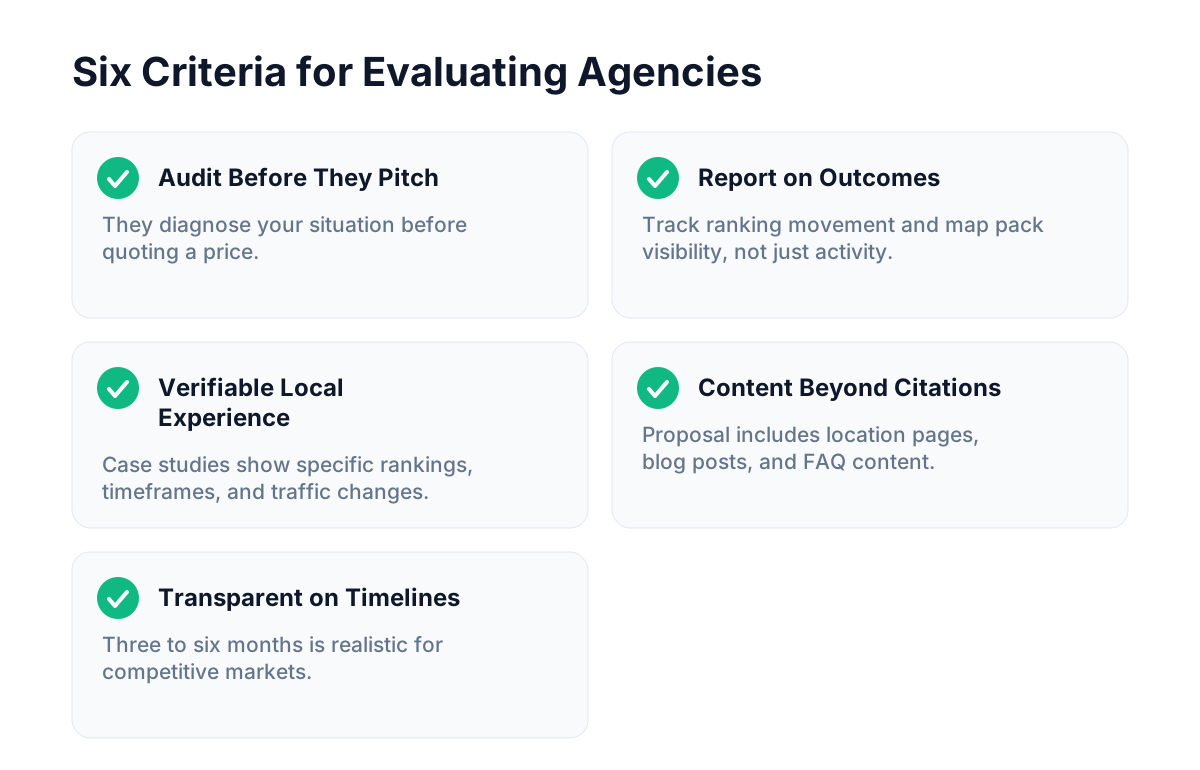
Six Criteria for Evaluating Local Search Engine Optimization Companies
1. They Audit Before They Pitch
A credible local SEO company will look at your current situation before quoting you. They should be able to tell you where your Google Business Profile stands today, what your citation consistency looks like, and which keywords you currently rank for locally. An agency that jumps straight to pricing without a diagnostic is selling a package, not a solution.
2. They Report on Outcomes, Not Just Activity
Activity reports ("we built 12 citations this month") are not the same as outcome reports ("your local pack visibility increased by 34% this month"). Ask specifically: what metrics do you track, how often do you report, and what does a typical report look like for a business at my stage? You want to see keyword ranking movement, map pack visibility, and ideally call or direction requests from your Google Business Profile.
3. They Have Verifiable Local Experience
Case studies matter. Ask for examples of businesses in comparable niches or markets, and check whether the results are specific (ranking position, timeframe, traffic change) rather than vague ("we helped them grow their online presence"). Reviews on third-party platforms are worth reading carefully too.
4. Their Content Strategy Goes Beyond Citations
Citation building is table stakes. The agencies that consistently produce durable local rankings also invest in content: location pages, locally relevant blog posts, FAQ content that matches how people in a specific area actually search. If an agency's proposal is only technical and off-page, ask directly how they approach content. [On-page fundamentals matter as much in local SEO as anywhere else](./on-page-seo-complete-checklist-for-every-page-you-publish).
5. They Are Transparent About Timelines
Local SEO results take time. A three to six month runway before significant ranking movement is realistic for competitive markets. Any company promising first-page results in 30 days is either targeting uncompetitive terms or misrepresenting what they can do. Transparency about timelines is a sign of professional honesty, not weakness.
6. Their Contract Terms Are Reasonable
Month-to-month contracts or short initial commitments (three months) with renewal options are fair. Long-term lock-ins with no performance benchmarks built in should raise questions. Ask what happens if you want to pause or exit, and make sure you retain ownership of any content they produce and any accounts they manage on your behalf.
Red Flags to Walk Away From
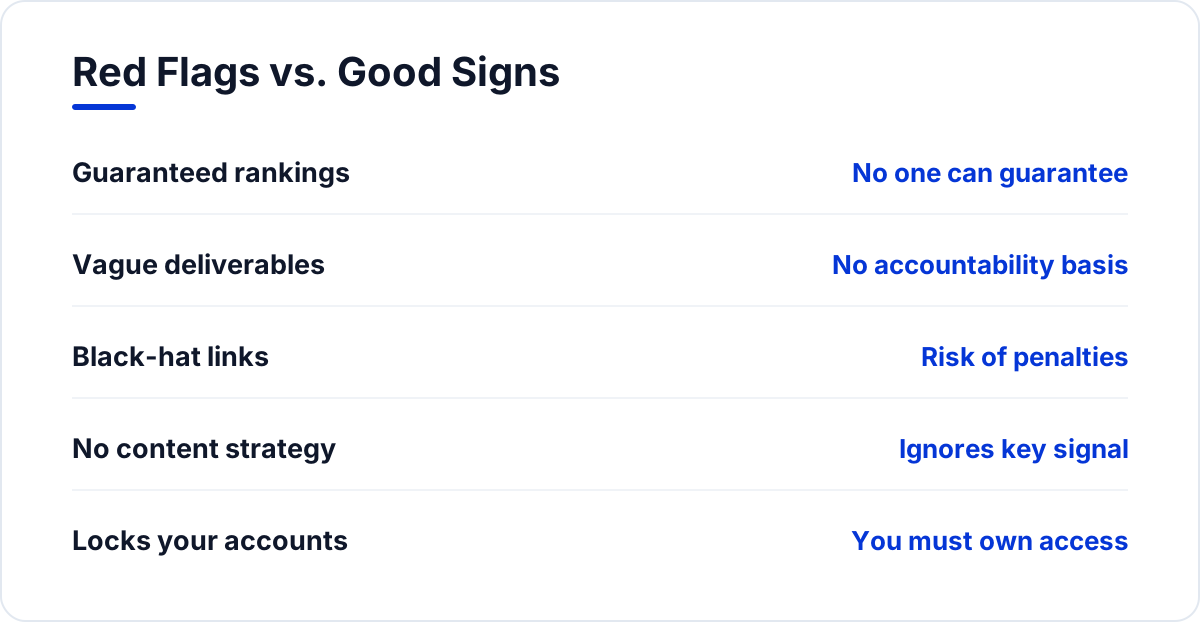
Guaranteed rankings: No one can guarantee a specific ranking. Google controls that.
Vague deliverables: If the scope of work does not list specific activities and output quantities, you have no basis for accountability.
Black-hat link schemes: Bulk link packages, private blog networks, and doorway pages are against Google's guidelines and can result in penalties that are difficult to recover from.
No mention of content: Agencies that ignore your website's content are leaving the most durable local ranking signal on the table.
They manage your Google Business Profile but won't give you access: You should always own your own accounts.
Questions to Ask Before You Sign
Bring these to any introductory call with a local SEO company:
1. What does your audit process look like before we start?
2. Which metrics do you report on, and how often?
3. Can you share a case study from a business similar to mine?
4. How do you approach local content, not just citations?
5. Who will actually be working on my account, a senior strategist or a junior generalist?
6. What do I own if we stop working together?
7. What is a realistic timeline for seeing ranking movement in my market?
The Content Gap Most Local SEO Companies Miss
Even excellent local SEO agencies often underdeliver on one area: consistent, locally relevant content. A single location page and a Google Business Profile are not enough to build topical authority in a competitive local market. You need a steady stream of useful, keyword-targeted content published regularly. That is genuinely hard to sustain when the agency is managing dozens of clients and content is not their core product.
This is a gap worth thinking about separately from the agency relationship. [Attracting organic traffic through consistent content](./seo-and-web-traffic-how-to-attract-more-visitors-to-your-site-organically) is not a one-time project; it compounds over time, and a blog that goes quiet for two months loses whatever momentum it built.
If your SEO agency handles technical and local signals well but cannot sustain a content cadence for you, an automated content platform can fill that gap. The combination of a focused local SEO partner handling your GBP and citations, alongside a consistent content publishing system handling your blog, is often more effective and more affordable than expecting one agency to do everything at volume.
When an Agency Is Not the Right Fit
Not every business needs to hire a local search engine optimization company. If you are a solo founder or a small team with a limited budget, paying a retainer that starts at several hundred dollars per month for SEO management may not be the best use of resources, especially in the early stages.
In that case, the more effective path is to handle the local signals yourself (claim and complete your Google Business Profile, get listed in major directories, ask for reviews consistently) and invest instead in publishing useful content regularly. [If you are starting from scratch, these first ten steps cover what matters most](./seo-for-new-websites-the-first-10-steps-to-get-found-on-google). Content builds authority over time and works for you whether or not you are paying an agency.
Conclusion
Hiring a local SEO company is worth it when you find one that audits first, reports on real outcomes, has verifiable local experience, and treats your website's content as part of the strategy, not an afterthought. Go in with a clear set of questions, trust specific answers over vague promises, and make sure any contract terms protect your ownership of accounts and assets.
Whatever path you take, consistent publishing is the multiplier. If managing a content calendar feels like the harder problem to solve, take a look at how a purpose-built content engine can handle the full pipeline from keyword discovery to live publication so your local SEO work has the content foundation it needs to compound.