How Long Does SEO Take to Show Results?
SEO takes between three and six months to show meaningful results for most small business websites. That is the honest, direct answer to how long does S...
 Written by Vladimiros Mykogian
- Search engines do not rank pages the moment they are published.
- Not every site waits the same amount of time.
- A site that has been publishing quality content for two years and has earned backlinks will rank new content faster than a site launched last month.
- A highly competitive keyword like "project management software" is dominated by well-funded sites with thousands of backlinks.
SEO takes between three and six months to show meaningful results for most small business websites. That is the honest, direct answer to how long does SEO take. If your site is brand new or operating in a competitive niche, expect the longer end of that range or beyond. If you are publishing consistently and targeting low-competition keywords, you can see traction closer to the three-month mark. Understanding why that timeline exists, and what actually controls it, is what lets you make smarter decisions with your time and budget.
Why Does SEO Take So Long in the First Place?
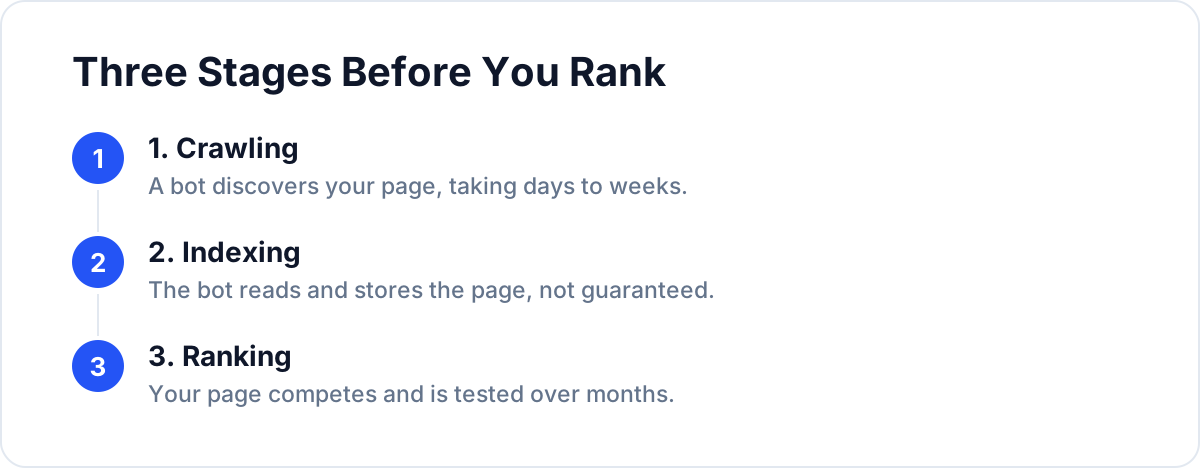
Search engines do not rank pages the moment they are published. There are three distinct processes that all have to complete before you see traffic.
1. Crawling: A search engine bot has to discover your page. For a new site or a new article, this can take days or even a couple of weeks.
2. Indexing: The bot reads and stores the page. This adds more time, and not every crawled page gets indexed.
3. Ranking: Once indexed, your page competes against every other page targeting the same keyword. The engine tests your content at various positions to measure how users respond to it. This iterative testing is the main reason results take months, not days.
That third step is the slow one. Search engines are essentially running a slow experiment on your content, and the feedback loop is long. Google's own documentation confirms that crawling and indexing alone can take anywhere from a few days to several weeks for new content, before ranking even begins.
The Factors That Control How Long SEO Takes for Your Site
Not every site waits the same amount of time. These are the variables that move the needle most.
Keyword competition
A highly competitive keyword like "project management software" is dominated by well-funded sites with thousands of backlinks. Targeting it as a small business is a slow, uphill climb. A more specific keyword like "project management software for freelance designers" is less contested and far more winnable in a shorter timeframe. Choosing the right keyword target is arguably the biggest lever you have over your timeline.
Publishing frequency and consistency
Publishing one article and waiting is not a strategy. Search engines interpret a consistent publishing cadence as a signal that a site is active and authoritative. A site that publishes two to four optimized articles per month compounds its authority faster than one that publishes sporadically.
Content quality and topical depth
A single shallow article on a topic will rank below a site that has covered that topic thoroughly across multiple, well-linked pieces. Building "topical authority," where your site becomes a recognizable resource on a subject, shortens the ranking timeline for new content you publish in that same area. If you want a deeper look at how topical authority works and why it matters, our guide on building topical authority through content clusters walks through the approach step by step.
A Realistic Month-by-Month Breakdown
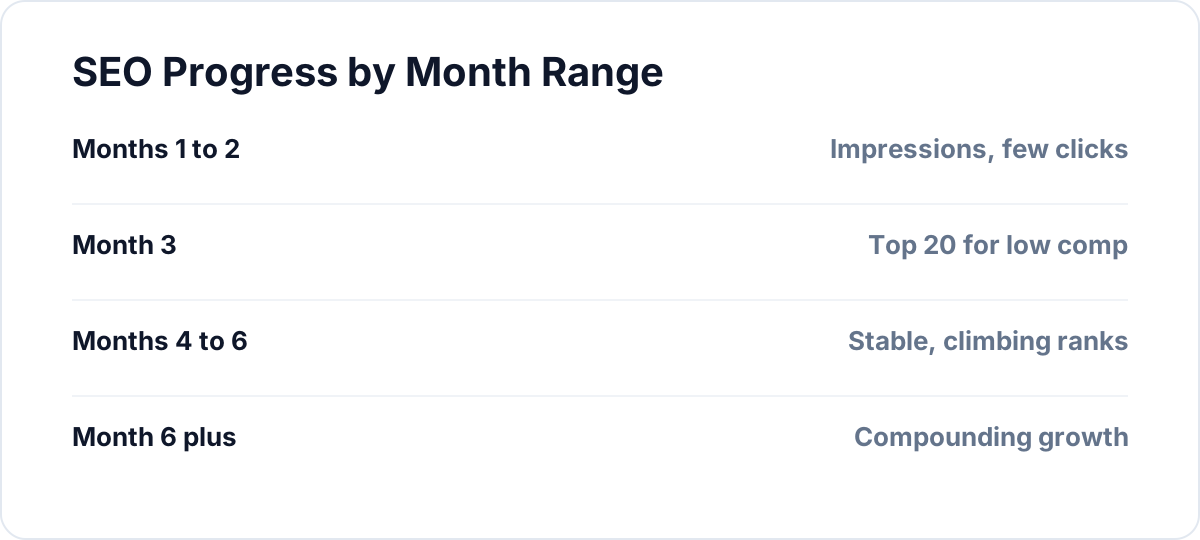
Here is a rough framework for what to expect, assuming consistent publishing of well-optimized content from day one.
Months 1 to 2: Your content is being crawled and indexed. You will see impressions appearing in search analytics but very few clicks. Rankings may appear in positions 20 to 50 for low-competition targets.
Month 3: For low-competition keywords, you may start seeing rankings creep into the top 20. Traffic is small but real. This is where most people incorrectly conclude "SEO doesn't work."
Months 4 to 6: Rankings stabilize and begin climbing for your best-optimized content. Traffic from organic search becomes a consistent, measurable channel.
Month 6 and beyond: Compounding kicks in. Older content gains backlinks and engagement signals. New content ranks faster because your domain has built authority. This is where SEO starts to feel like an asset rather than a cost.
The mistake most founders make is abandoning the strategy at month two or three, right before the compounding begins.
What You Can Do to Speed Up Results
You cannot make search engines move faster, but you can reduce the time spent in each phase.
Target low-competition, long-tail keywords first. These are easier to rank for and start generating traffic signals that help your broader authority.
Publish consistently. Even two quality articles per month is enough to build momentum. Sporadic publishing restarts the trust-building process every time.
Fix technical basics early. If search engines cannot crawl your site efficiently, nothing else matters. Make sure your pages load quickly, are mobile-friendly, and are not accidentally blocked by your site's settings.
Build internal links. When you publish a new article, link to it from two or three relevant existing pages. This passes authority and helps bots find the new content faster.
Earn or request backlinks. Even a handful of backlinks from relevant, credible sites can meaningfully accelerate rankings. Reach out to sites you have referenced in your writing or look for opportunities to contribute guest content.
The Compounding Payoff: Why the Wait Is Worth It
SEO is slow at the start and fast at the end. That is the opposite of paid advertising, which delivers traffic immediately but stops the moment you stop paying.
Once a piece of content earns a first-page ranking, it can drive traffic for years with minimal ongoing effort. A small business that publishes consistently for 12 to 18 months typically reaches a point where organic traffic grows month over month without proportional increases in effort. That compounding dynamic is what makes SEO one of the highest-return channels available to founders who are managing their own marketing.
The founders who win at SEO are not the ones who found a shortcut. They are the ones who started sooner, stayed consistent, and kept improving their content over time.
FAQ
How long does SEO take for a brand-new website?
A brand-new domain typically takes six months or longer to rank meaningfully, even for low-competition keywords. Search engines need time to assess a new site's credibility. Publishing consistently and earning even a few backlinks can shorten this window.
Can SEO show results in less than three months?
Yes, if you target very low-competition, long-tail keywords on a site that already has some domain authority. In those cases, you can see rankings and a small amount of traffic within four to eight weeks. It is the exception, not the rule, but it is achievable with the right keyword strategy.
Does publishing more content speed up SEO?
More content helps if it is well-optimized and targets relevant keywords. Publishing ten thin, unfocused articles is less effective than publishing four thorough, well-targeted ones. Quality and relevance matter more than raw volume.
Why did my rankings drop after a few weeks?
This is common and expected. Search engines often briefly rank new content high to test user engagement, then adjust the position based on what they observe. A page that drops after an initial spike is not failing. It is being calibrated. Rankings typically stabilize and recover over the following weeks if the content is genuinely useful.
---
SEO is a long game with a real payoff. The timeline is three to six months for early results and six to eighteen months to reach consistent compounding growth. The best thing you can do today is start publishing optimized content consistently and commit to the process long enough to reach the compounding phase. If you are looking for a way to do that more efficiently, audit your current publishing workflow and look for places where you are losing time or consistency.