Generative Engine Optimization GEO Tools: Top Picks for 2026
Generative engine optimization GEO tools are purpose-built software that help your content get cited by AI answer engines like ChatGPT, Claude, and Gemi...
 Written by Vladimiros Mykogian
- Two years ago, "getting cited by AI" was a niche experiment.
- Before you can improve your GEO performance, you need to know where you currently stand.
- AI engines heavily weight content that is well-structured and semantically clear.
- This is the biggest category, and the most crowded.
Generative engine optimization GEO tools are purpose-built software that help your content get cited by AI answer engines like ChatGPT, Claude, and Gemini, not just ranked on Google. In 2026, showing up in an AI-generated answer is often more valuable than a page-one ranking, because the user gets your answer without needing to click anywhere else. If you are not actively optimizing for that, you are leaving a significant share of visibility on the table. This guide covers the categories of generative engine optimization GEO tools that actually move the needle, what to look for inside each one
Why Generative Engine Optimization GEO Tools Are Now Essential, Not Optional
Two years ago, "getting cited by AI" was a niche experiment. Today it is a measurable traffic and brand channel. AI answer engines pull from structured, authoritative, and clearly written content. They favor sources that directly answer a question in the first sentence, use specific data, and demonstrate consistent topical coverage.
Traditional SEO tools were not designed for this. They track rankings and backlinks. They do not tell you whether your content appears in a Gemini snapshot or a ChatGPT response. That gap is exactly what the new generation of GEO tools fills.
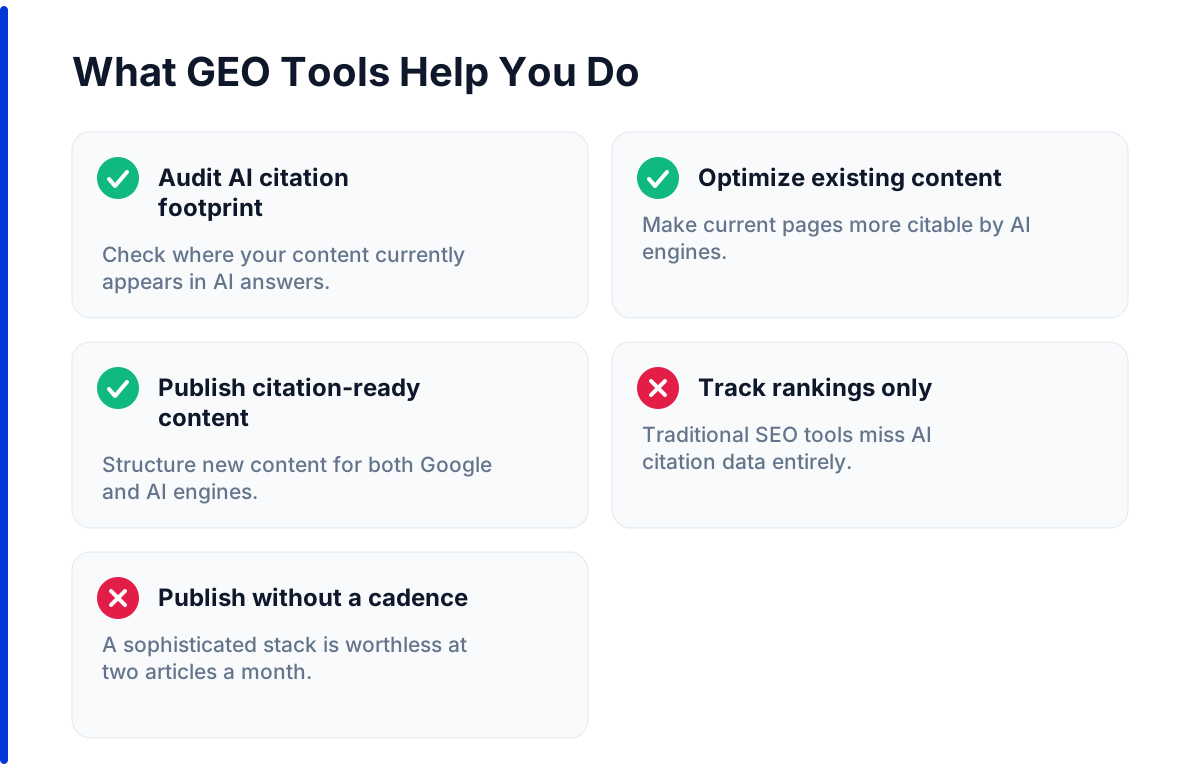
The right generative engine optimization GEO tools help you do three things: audit your current AI citation footprint, optimize existing content to be more citable, and publish new content that is structured for both Google and AI engines from day one.
Category 1: AI Citation Monitoring Tools
Before you can improve your GEO performance, you need to know where you currently stand. Citation monitoring tools track whether your domain or specific articles appear in AI-generated responses for target queries.
What to look for in a monitoring tool:
Query coverage: Can you input a list of target questions and see which AI engines cite you?
Competitor visibility: Does it show which other sources are getting cited instead of you?
Trend tracking: Does it log citation frequency over time, so you can measure improvement?
When evaluating these tools, run a sample of your ten most important informational queries through the interface. If the tool cannot surface clean, query-level data within two or three clicks, the workflow will not stick.
Category 2: Content Structuring and Schema Tools
AI engines heavily weight content that is well-structured and semantically clear. This is where schema markup, FAQ formatting, and heading hierarchy become direct ranking factors for GEO, not just SEO hygiene.
Key capabilities to prioritize:
FAQ and HowTo schema generation: Structured data signals to AI crawlers exactly what your content answers.
Heading and outline analysis: Tools that flag when your H2 and H3 structure is too vague or too dense.
Entity recognition: Tools that identify whether your content clearly establishes the key entities (people, products, concepts) it covers.
A practical test: paste one of your existing articles into a schema validator and count how many structured data types it supports. Most small business content scores zero. Adding even basic FAQ schema to your top ten pages is a concrete, low-effort win.
Category 3: Content Generation and Optimization Platforms
This is the biggest category, and the most crowded. These platforms help you create content that is optimized for both traditional search and AI citation from the moment it is written.
The best platforms in this category do the following:
Generate first drafts that are structured with direct-answer openings (the format AI engines prefer for citation)
Score content against on-page SEO signals: keyword density, readability, internal linking, meta description quality
Match your brand voice consistently across every article, so your content sounds like you, not a generic AI
Integrate with your CMS (WordPress, Webflow, Shopify) so publishing does not require a separate manual step
The brand voice piece is underrated. AI engines cite sources that have consistent, authoritative signals across multiple pages. If half your articles read like marketing copy and half read like technical documentation, you look like a less reliable source. Consistency is a trust signal.
Kedauros is built specifically around this workflow: it generates, scores, schedules, and publishes brand-voice-matched articles that are structured for both Google rankings and AI citations, without requiring a writer or agency in the loop.
Category 5: Analytics and ROI Measurement Tools
GEO without measurement is guesswork. You need to track three things: traditional keyword rankings, AI citation frequency, and the organic traffic and leads that result from both.
A minimal GEO analytics stack in 2026 includes:
1. Search Console for organic ranking and impression data (free, essential baseline)
2. A citation tracker from Category 1 for AI engine visibility
3. A traffic analytics tool to connect content performance to actual sessions and conversions
The metric most teams ignore is citation rate over time. Set a baseline in month one, then check monthly. If you publish ten new articles optimized for GEO and your citation rate does not improve in 60 days, the problem is either content quality, topic selection, or structure. Each of those is fixable once you can see the data.
How to Build a Lean GEO Tool Stack Without Overcomplicating It
Most small business and SaaS teams do not need six separate tools. They need one platform that handles generation and optimization, one that monitors citations, and a free analytics layer on top.
The mistake most teams make is buying tools before establishing a publishing cadence. A sophisticated GEO stack is worthless if you publish two articles a month. Volume and consistency matter. AI engines learn to treat you as an authority partly based on how frequently you produce relevant, high-quality content.
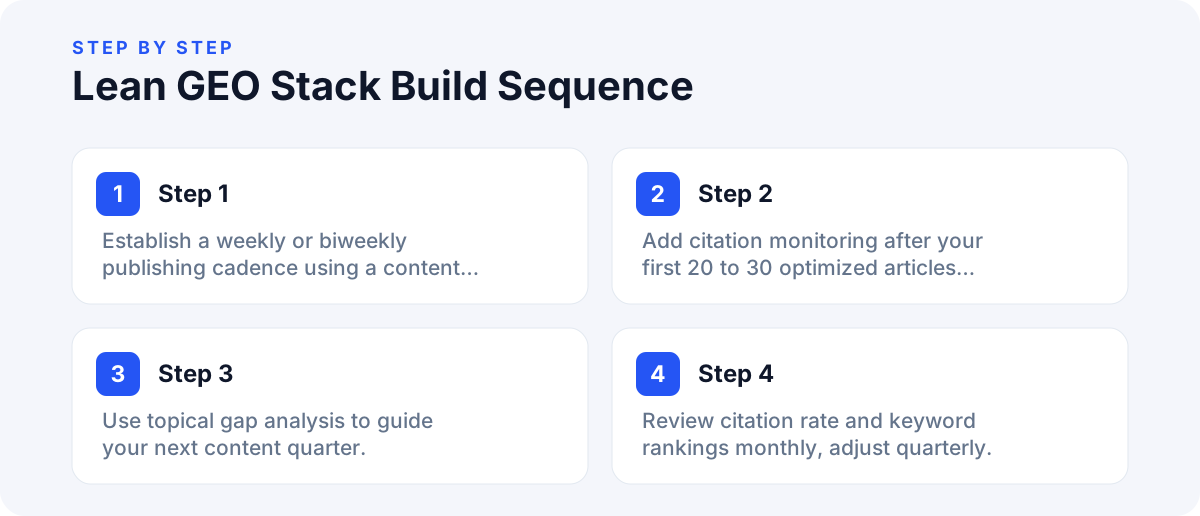
Start with this sequence:
1. Establish a weekly or biweekly publishing cadence using a content generation platform
2. Add citation monitoring after your first 20 to 30 optimized articles are live
3. Use topical gap analysis to guide your next content quarter
4. Review your citation rate and keyword rankings monthly, adjust quarterly
That cycle, repeated consistently, compounds over time in ways that one-off content campaigns never do.
FAQ
What is a GEO tool and how is it different from an SEO tool?
A GEO tool (generative engine optimization tool) is designed to help your content get cited by AI answer engines like ChatGPT, Claude, and Gemini, not just ranked on Google. Traditional SEO tools track rankings and backlinks. GEO tools track AI citation frequency, content structure for AI readability, and topical authority signals that AI engines use to choose sources.
Which content formats get cited most by AI engines?
Direct-answer openings, FAQ sections with clear questions and concise answers, numbered steps, and content with schema markup are cited most often. AI engines prefer content that answers a question in the first one or two sentences and then expands with specifics.
How long does it take to see results from GEO optimization?
Most teams see measurable improvement in AI citation frequency within 60 to 90 days of consistent publishing, assuming they are producing at least four to six well-structured articles per month. Citation monitoring tools let you track this rather than guessing.
Do I need a separate GEO tool if I already use an SEO platform?
Most traditional SEO platforms do not track AI citations or optimize content structure for AI readability. If getting cited by ChatGPT, Claude, or Gemini matters to your business, a dedicated GEO layer (or an integrated platform built for both) is worth adding.
---
Getting your generative engine optimization GEO tools stack right does not require a large budget or a dedicated team. It requires choosing the right category of tool for where you are right now, establishing a publishing cadence, and measuring the right signals. Start with one good platform, build the habit, and layer on monitoring once you have content worth tracking.